
Exploring the Philosophical Undertones of Girls Last Tour
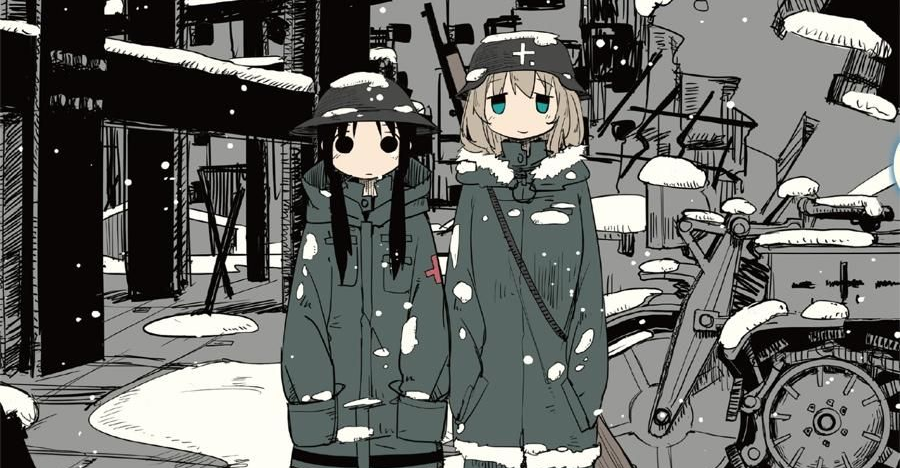
"Girls Last Tour," a captivating manga and anime series created by Tsukumizu, delves into the complexities of existence, friendship, and the profound search for meaning in a desolate post-apocalyptic world. At its heart, the series follows two young girls, Chito and Yuuri, as they navigate the remnants of a once-thriving civilization in a world devoid of life, exploring themes that resonate deeply with philosophical exploration. The stark imagery and contemplative dialogue weave a narrative that encourages viewers and readers alike to reflect on life, death, and what it means to find joy amidst despair.
The Search for Meaning
One of the central philosophical undertones of "Girls Last Tour" is the existential search for meaning. In a world that has been stripped of its vibrancy, Chito and Yuuri embark on their journey with a sense of curiosity that borders on the philosophical. As they explore the ruins of humanity, they ponder the significance of their existence in a place where everything they know has been lost. This aligns with existentialist thought, particularly the ideas presented by philosophers like Jean-Paul Sartre and Albert Camus, who suggest that meaning is not inherent but must be created through choices and actions. The girls’ conversations often reflect a deep introspection that invites viewers to consider their own lives and the meaning they attribute to them.
The Power of Friendship
Another profound theme in "Girls Last Tour" is the power and importance of friendship in the face of adversity. In their bleak surroundings, Chito and Yuuri's bond becomes an anchor, a source of hope, and a reminder of what it means to be human. Their interactions are full of warmth, humor, and vulnerability, emphasizing the necessity of companionship during challenging times. This idea finds its roots in philosophical discussions surrounding human connection, reminiscent of thinkers like Martin Buber, who asserted that genuine relationships are essential for a fulfilling life. The girls’ reliance on each other not only highlights the significance of interpersonal relationships but also illustrates how companionship can imbue life with meaning, even in the most desolate circumstances.
The Role of Time
Time plays a critical role in the narrative of "Girls Last Tour." The girls' journey is marked by the cyclical nature of time, alongside moments of stillness and reflection that challenge their understanding of progress. This evokes philosophical inquiries about the nature of time itself, drawing from concepts articulated by thinkers such as Henri Bergson, who posited that time is not just a measurable quantity but a qualitative experience. The series often reflects on the past, present, and future, showcasing how memories shape their reality while questioning the linear perception of life. This exploration of time serves as a reminder that while the context may change, the human experience remains interconnected, resonating throughout generations.
Girls Last Tour Merchandise
For fans looking to embrace the philosophical and aesthetic charm of "Girls Last Tour," merchandise dedicated to the series offers a tangible connection to its themes. Items like figurines, apparel, and art prints allow devotees to express their love for the series, while also serving as conversation starters about the underlying philosophies that the series gracefully presents. Whether it’s a cozy hoodie featuring the iconic girls or a stunning wall print that captures the desolate beauty of their journey, "Girls Last Tour merchandise" embodies more than just a fandom; it encapsulates the deeper exploration of existence and connection that resonates with many. Collecting these items not only enriches the fan experience but also fosters a community of individuals who ponder the same existential questions sparked by Chito and Yuuri's extraordinary journey.


